Initial Phase
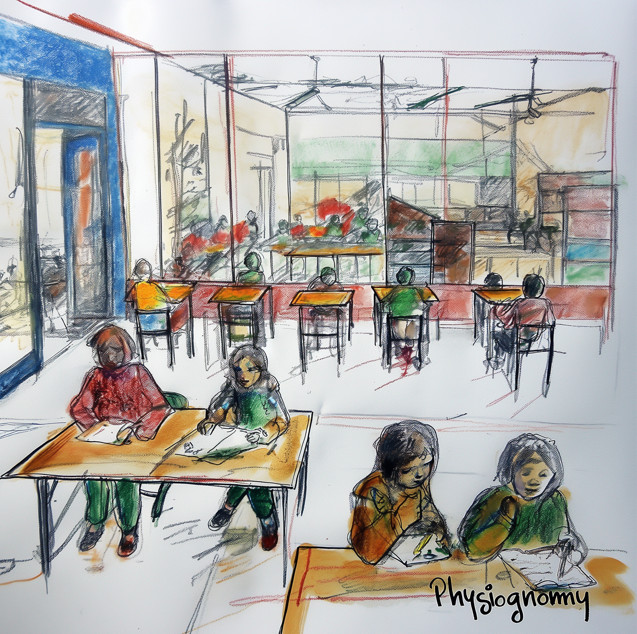
“Physiognomy at School” began in early 2019 as an initiative to provide a series of philosophy seminars for adolescents (ages 12-20) across various European countries. This extracurricular program enriched local school curriculums by offering in-depth courses on European social and political life, stimulating democratic and philosophical debates. Rapidly adopted in multiple regions, the program proved flexible and adaptable to local specifics, highly appreciated as an experimental, innovative journey toward the political education of future citizens. The seminars enabled students to become well-informed about local and European political democracy, logically evaluate political arguments, and develop critical thinking based on the humanistic values of philosophical dialogue.
The lack of practical education provided ideal stepping-stones for designing philosophy seminars as an action-based, immersive journey, connecting individual citizens with the international environment. Inspired by the creator’s book, the project is called Physiognomy, aiming to examine the local European political physiognomy of a changing world for modern youth. Humanistic, philosophical education facilitated interpersonal participation, motivating students to engage in debate discussions. Students became the real protagonists, developing arguments and discussing proposals for the present and future of their local lives. In this setting, the teacher gradually became the coordinator of students’ dialogue rather than the central focus.
Overcoming the limitations of a strict school timetable, students actively discussed and evaluated the truthfulness of each argument in each lecture. Teachers supervised these discussions, ensuring democratic, meaningful communication with a logical development of ideas, free from personal attacks and unreasonable rhetoric. Young students participated in new discussions on different topics, and the experimental, interactive nature of this communication stimulated constant active participation. By addressing real-life issues from both individual and societal perspectives, the divergent views and expectations of the two sides became apparent. Applying philosophical theory for logical reasoning and argumentation, students engaged in debates with differing opinions, learning to respect others’ arguments and critique them using accurate information and rational counter-argumentation.